A realistic breakdown of per square foot rates, where the money goes, and the five costs that are usually left out of the first quotation you receive.
The first number a homeowner hears is almost always too low. Not because anybody is lying, but because the number is a rate for the structure and the person hearing it assumes it is a rate for a finished house. Those are two different figures, and the gap between them is where most budget arguments begin.
The honest range
For a standard residential build in the Kathmandu Valley in 2026, a fully finished house lands between NPR 2,400 and NPR 3,400 per square foot of built area. The lower end is a simple structure with local tiles, standard sanitary ware and painted walls. The upper end has imported tiles, better fittings, aluminium windows and some joinery included.
A rate below NPR 2,000 is either a structure-only rate, or a rate that assumes you will buy the materials yourself.
Where the money goes
| Element | Share of budget |
|---|---|
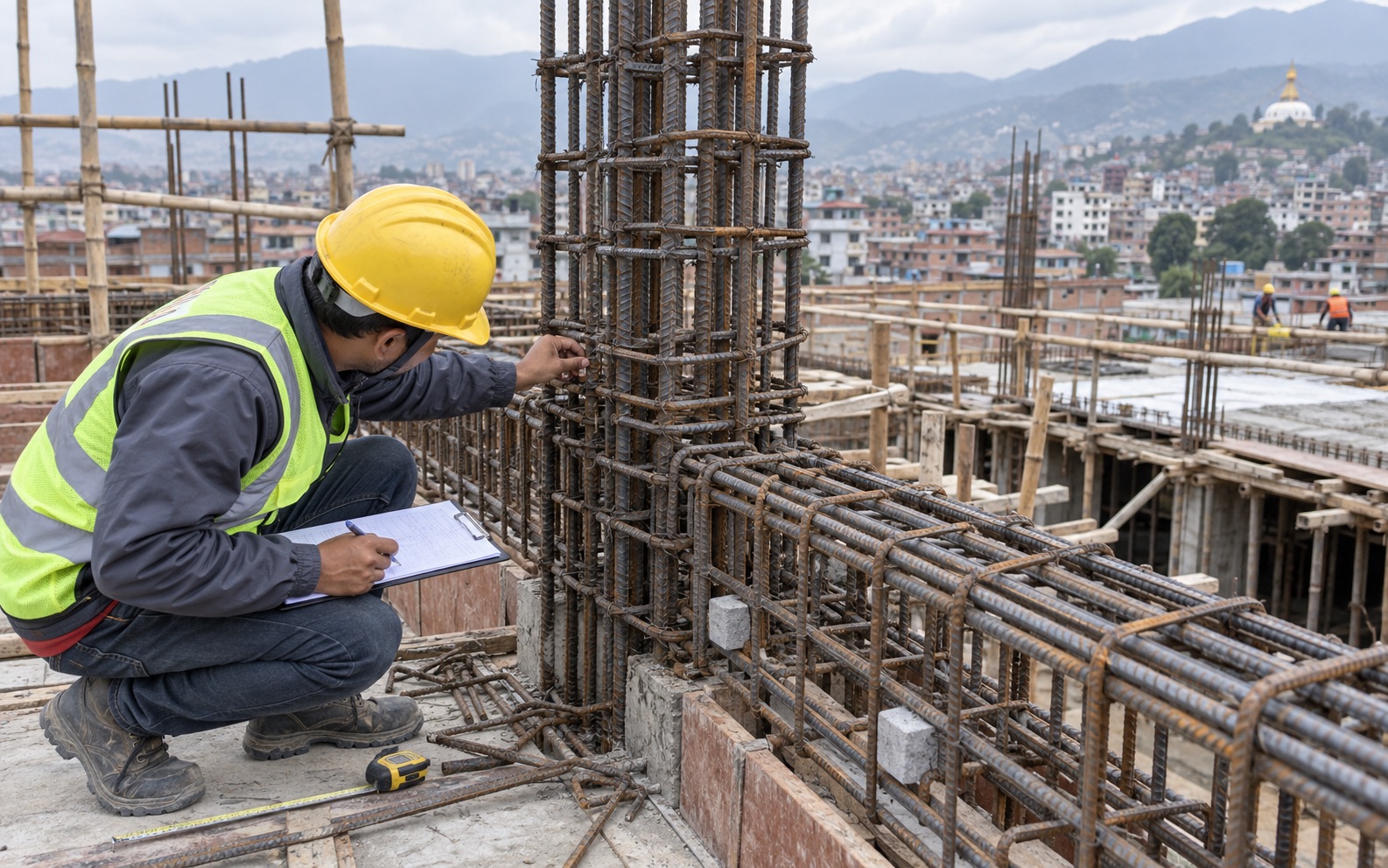
| Structure: concrete, steel, formwork | 30 to 35 percent |
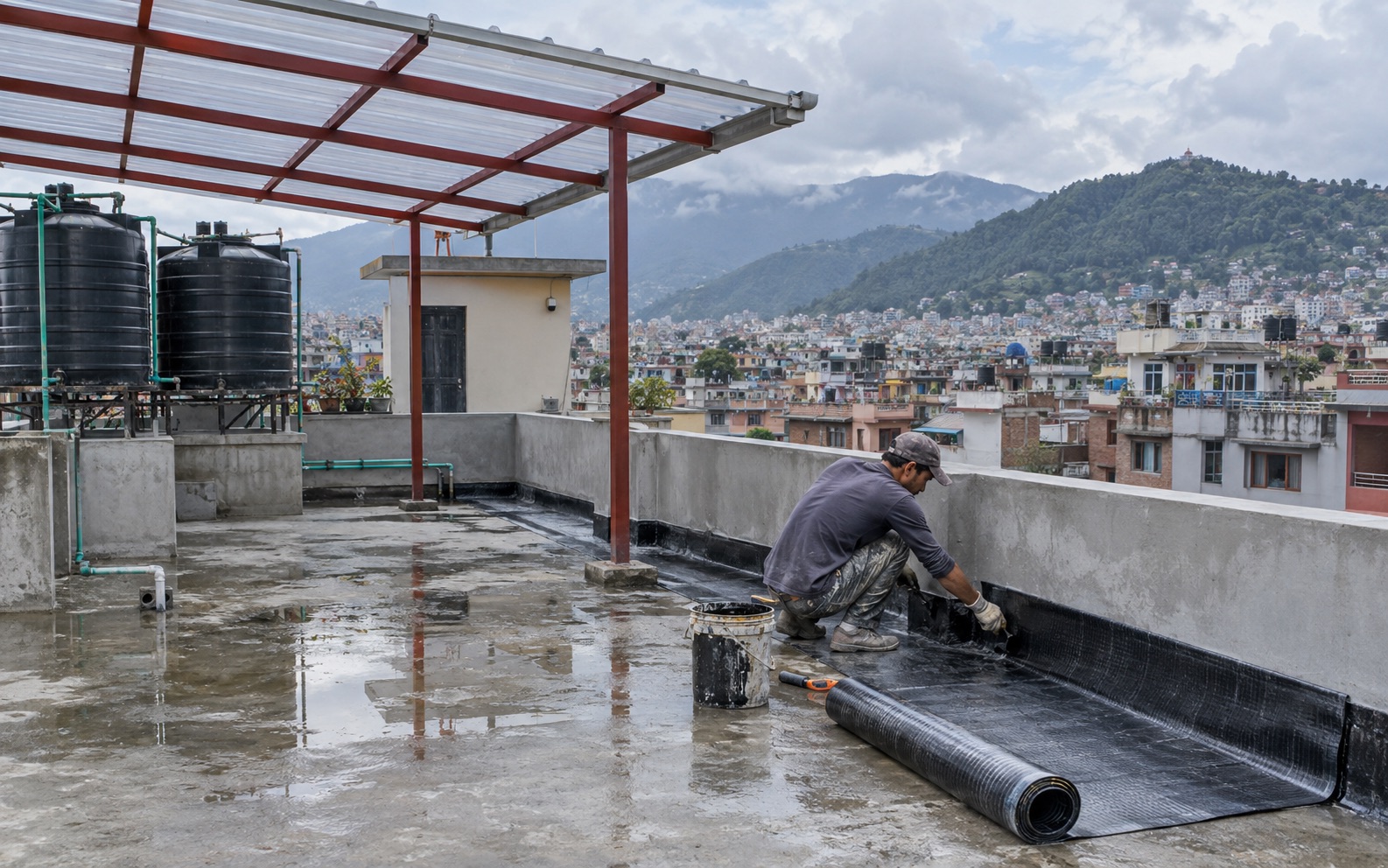
| Masonry, plaster and waterproofing | 12 to 15 percent |
| Finishes: tiles, paint, doors, windows | 25 to 30 percent |
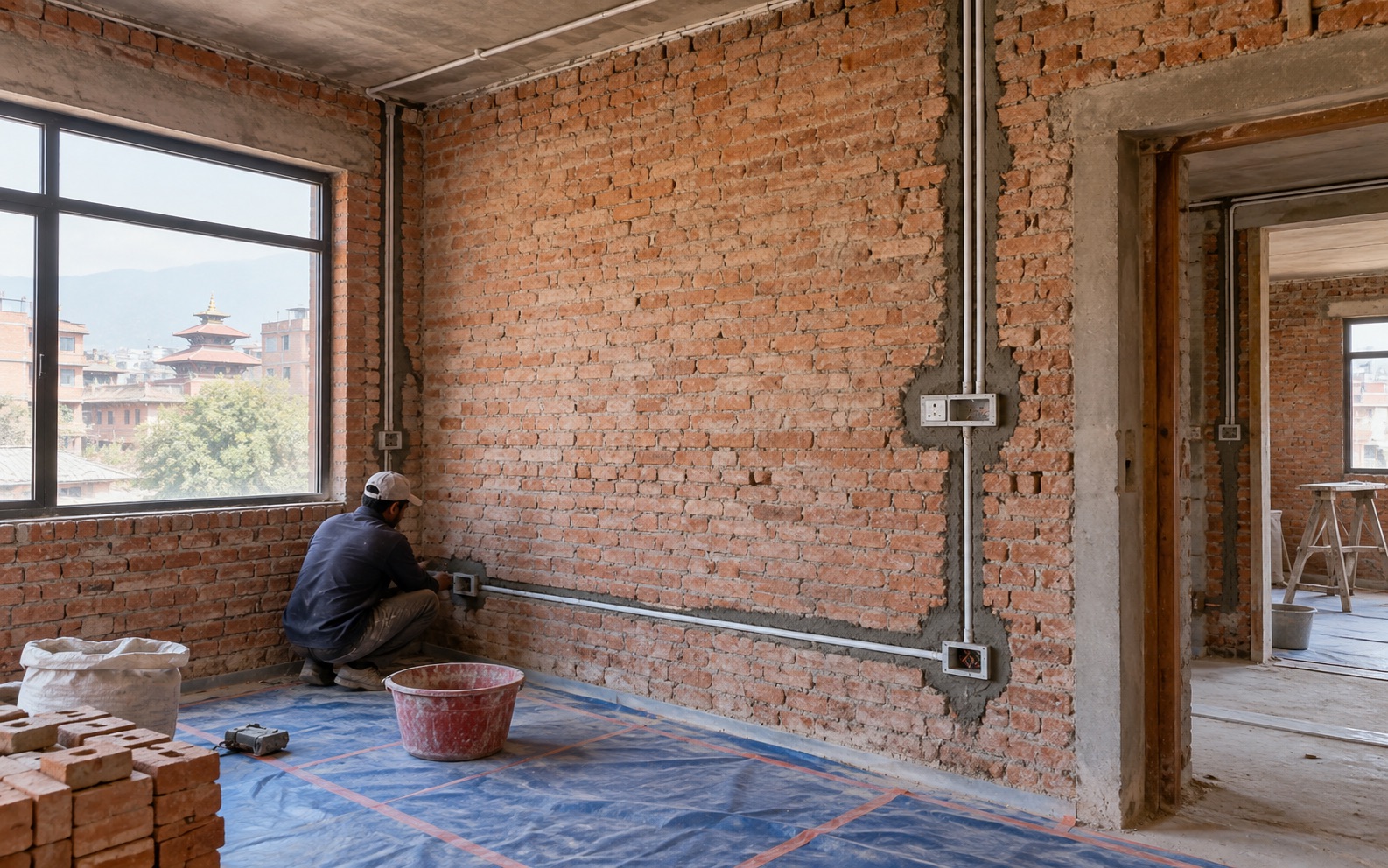
| Electrical and plumbing | 10 to 12 percent |
| Labour supervision and site running costs | 8 to 10 percent |
The five costs usually left out
- Boundary wall and gate. On a typical plot this is three to eight lakh, and it is almost never in the first quotation.
- Soil condition. If the plot needs deeper footings or fill, that cost appears after the excavation, not before.
- Access. A lane that cannot take a transit mixer means pumping or head loading, and both cost money on every pour.
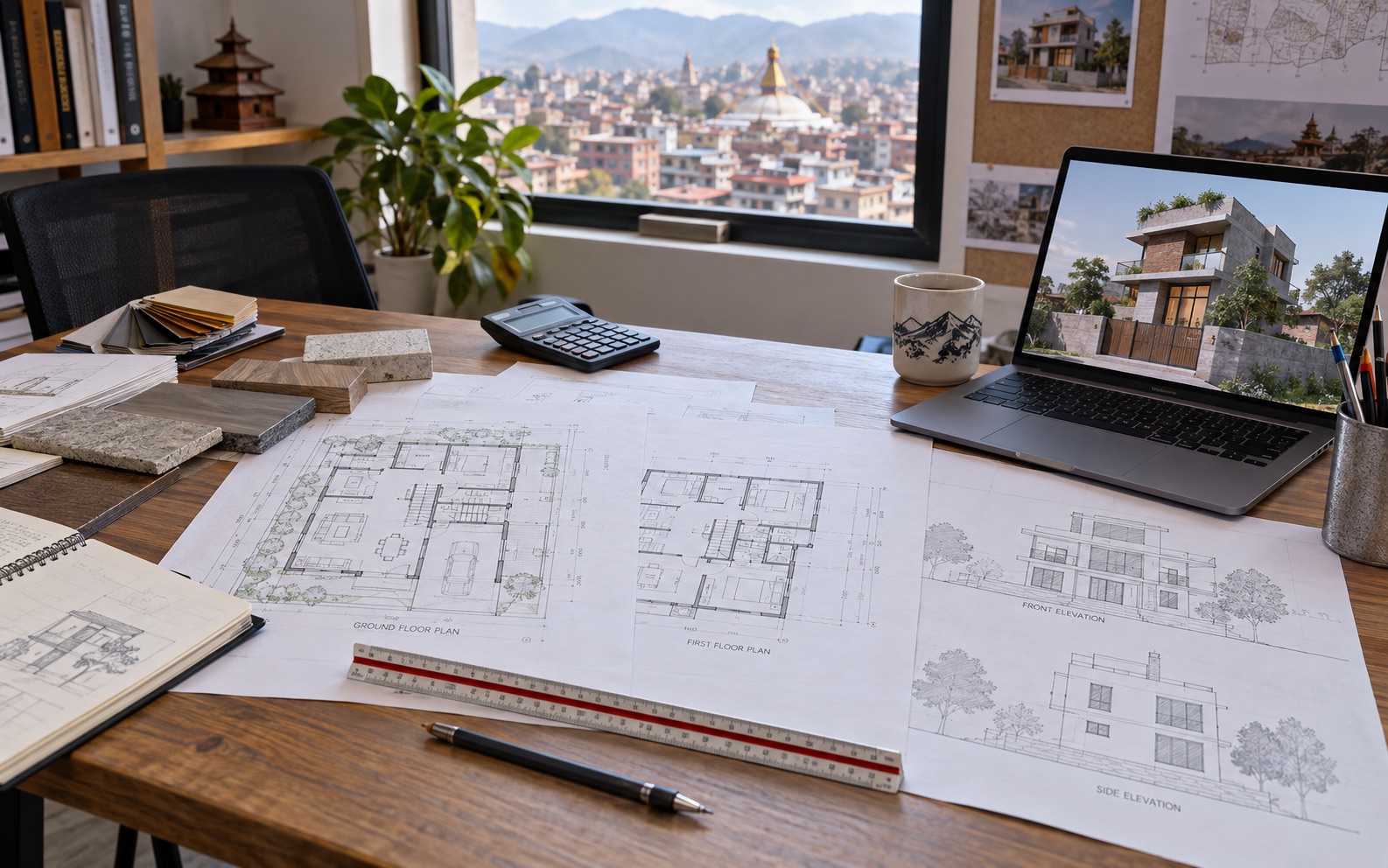
- Municipal fees and drawings. Government charges are the owner responsibility and vary by municipality and built area.
- Kitchen, wardrobes and lighting. Interiors are a separate trade with a separate budget, commonly fifteen to twenty five lakh for a family house.
How to compare two quotations properly
Put them side by side and check three things. First, the steel: is the weight stated, and at what grade. Second, the concrete: which grade, and is cube testing included. Third, the finishes: are brands and sizes named, or does it say tiles as per selection. A quotation that names nothing can be reduced to any number the contractor likes, because nothing in it is a promise.
If two quotations differ by more than fifteen percent, they are not quoting the same building. Find the difference before you choose on price.
What we recommend
Ask for a bill of quantities, not a lump sum. A bill of quantities lists each item with a quantity and a rate, so when a rate looks wrong you can see which one it is. It also means a variation later is a line item change rather than a negotiation.