

Building across Nepal since 2015


Construction work that finishes on time
New houses, renovations and interiors - one team, one fixed price, weekly progress you can see.
240+
Projects delivered
10
Years in construction
65
Engineers and craftsmen
96%
Handed over on schedule
- Written scope and a fixed price agreed before work starts
- One named point of contact from the first call to handover
- Weekly progress updates while the work is on site
Recent work
Projects we have handed over
A sample of residential, commercial and renovation work completed by our teams.


Why owners choose us
हामी नै किन ?
Most complaints in Nepali construction come from the same three places: a price that changes halfway, a site nobody supervises, and a contractor who stops answering the phone. Our whole process is built to remove those three.
- Priced item by item.You receive a bill of quantities, not a single lump-sum number.
- Supervised daily.A site engineer signs off each stage before the next one starts.
- Materials you approve.Brands and grades are agreed in writing before purchase.
- Payments tied to milestones.You pay for work that is finished and checked.
- Reachable.One project manager, one number, replies the same day.
What we do
One contractor for the whole building
From the first site survey to the final coat of paint, every trade is managed in-house so nobody is left waiting on somebody else.
Building Construction
Complete residential and commercial builds, from the foundation to the final handover, under one fixed-price agreement.
Read moreRenovation Work
Older houses brought up to date: layout changes, new services and finishes that suit how you live now.
Read more2D and 3D Design
Architectural drawings, municipal drawing sets and 3D views, so you can see the house before it is built.
Read moreConstruction Supervision
For owners who already have a contractor: independent supervision, quality checking and bill verification.
Read moreInterior Work
Interiors drawn, costed and built by the same company, so the design that was approved is the one that gets built.
Read moreUPVC Roofing
UPVC roofing sheets and structures for terraces, sheds, parking and extensions that stay cool and quiet in rain.
Read more
Our process
Six steps from first call to handover
-
Site visit
We visit the plot, take measurements and levels, and understand what you want to build and what you want to spend.
-
BOQ and estimation
You receive a bill of quantities, item by item, and a fixed price with nothing hidden.
-
Naksha pass
We prepare the municipal drawing set and follow the building permission through the office.
-
Structure work
Foundation, columns, beams and slabs, with a site engineer checking each stage before the next one starts.
-
Finishing
Masonry, plaster, electrical, plumbing, tiling, doors, windows and paint.
-
Handover
We walk the building with you, close the punch list, and hand over the drawings and the warranties.
What we have built so far
Since 2015
building across Nepal
In-house
electrical, plumbing and finishing teams
Written
scope and fixed price before work starts
Weekly
photographs and progress updates
One
named contact from first call to handover
1 year
workmanship warranty after handover
The people
The people who will be on your job
Anyone can call themselves a contractor. These are the people you will actually be dealing with.

Bikash Adhikari
Founder and Managing Director

Sunil Karki
Chief Engineer · NEC Reg. 24187 Civil "A"

Rajan Maharjan
Chief Financial Officer

Rasmi Nepali
Marketing and Client Relations
Client feedback
What owners say after handover
★★★★★
The price we agreed in the BOQ is the price we paid. One item changed, because we asked for a different tile, and it was priced in writing before anyone laid it. The handover date moved by four days.
Homeowner
Four storey residence · Bhaisepati, Lalitpur
★★★★★
What I valued was the weekly photographs. I was abroad for most of the work and never had to ring and ask how it was going. The punch list was closed before they asked for the last payment.
Shop owner
Ground floor commercial fit-out · Naxal, Kathmandu
★★★★★
We had water coming through the terrace slab for two monsoons. They opened it up, showed us where it was getting in, and fixed that rather than selling us a whole new slab. Dry since.
Homeowner
Bathroom and terrace waterproofing · Sanepa, Lalitpur
From the site notes
Guides for people building in Nepal
Costs, materials, permissions and the mistakes that are expensive to fix later.
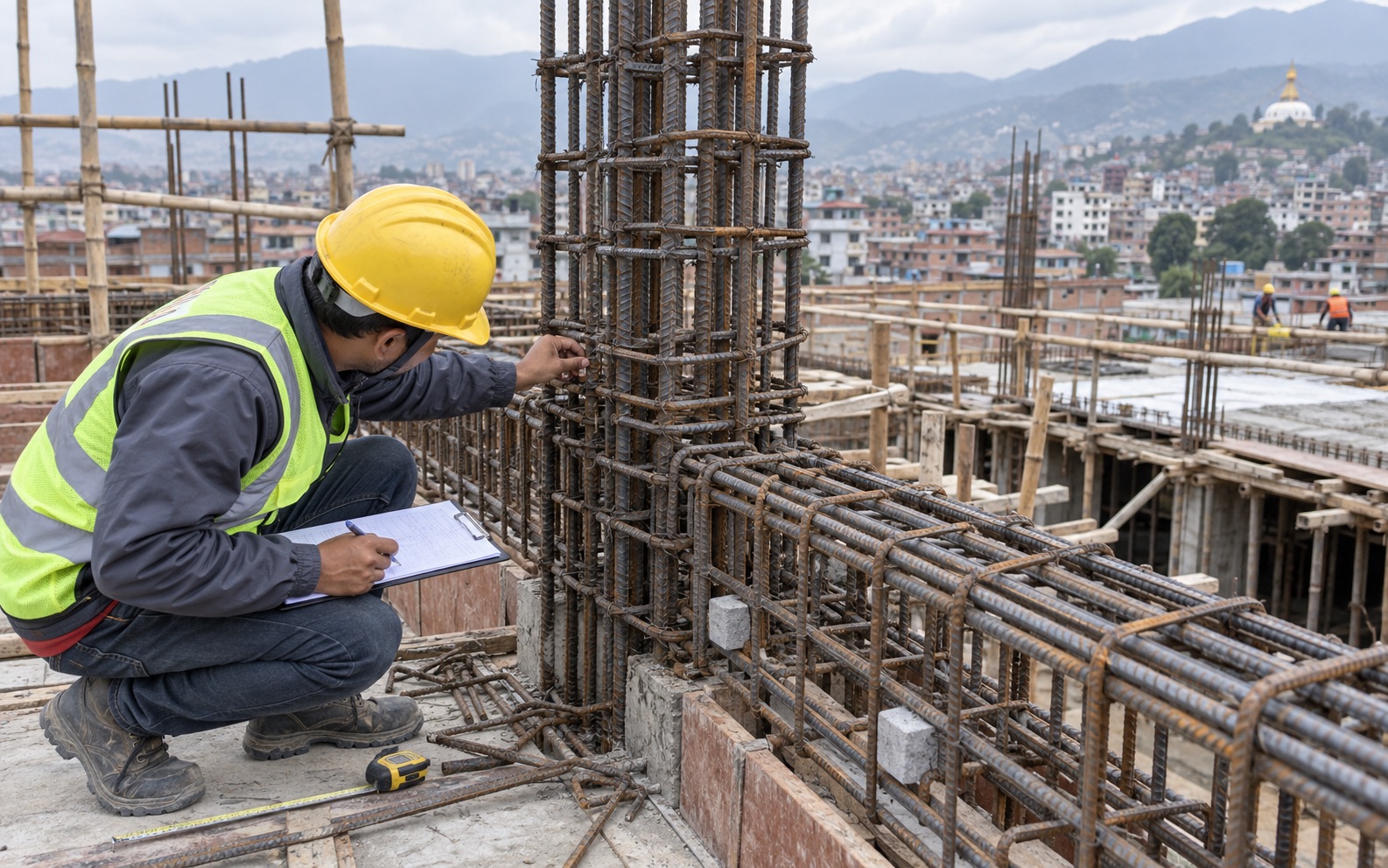
Earthquake safe detailing: the parts nobody sees
A building survives an earthquake because of joints, ties and continuity that are invisible once the plaster is on. Here is what to insist on while they can still be seen.
Read article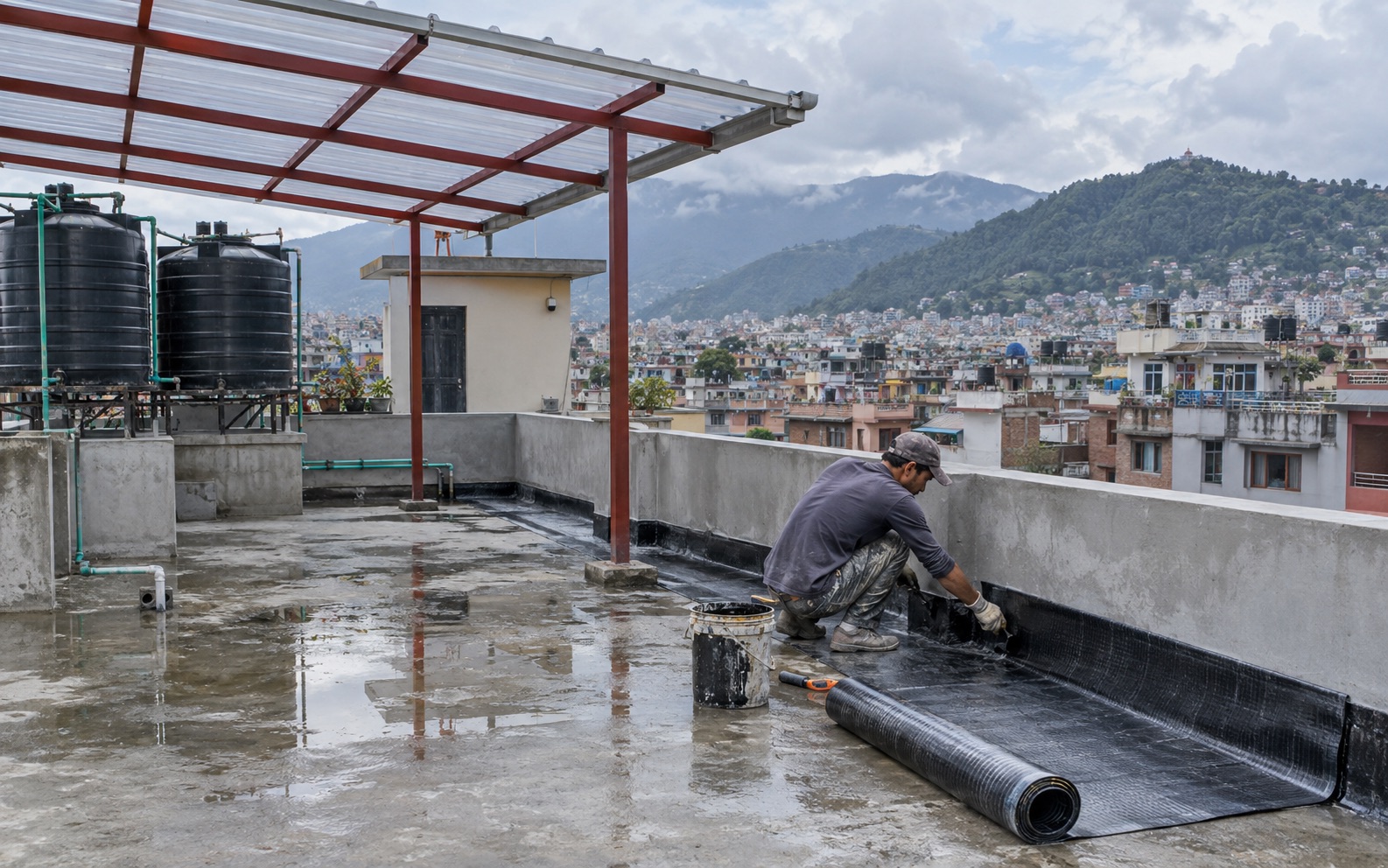
Monsoon construction: what to stop, what to continue
Four months of rain does not have to mean four months of no progress, if the programme is arranged around the weather rather than against it.
Read article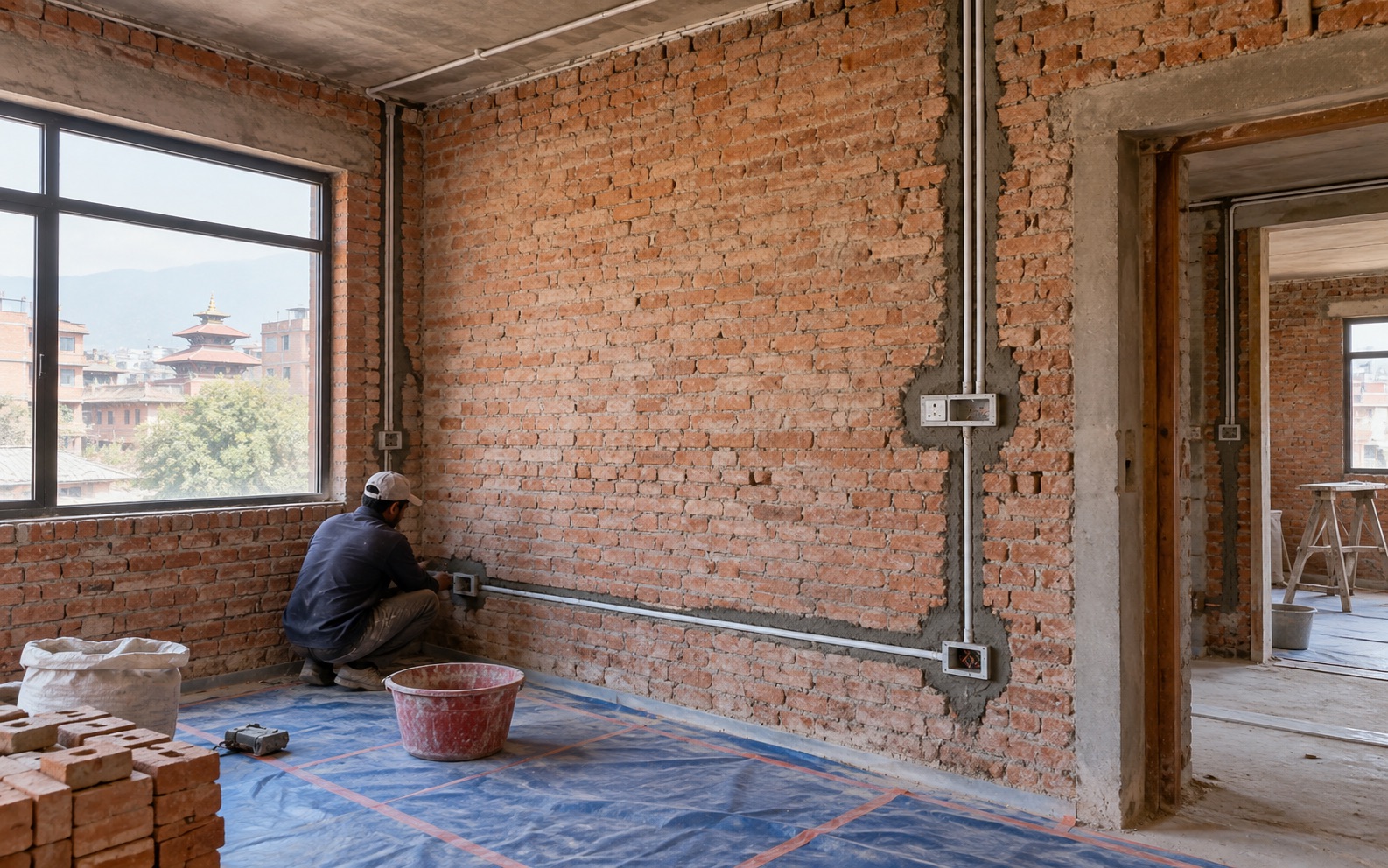
Nine renovation mistakes that cost Nepali homeowners the most
Renovation goes wrong in predictable ways. Here are the nine we are called in to fix most often, and what to do instead.
Read article
Concrete grade and steel: what your engineer wishes you knew
Six checks any owner can make on site, without an engineering degree, that catch the majority of structural quality problems.
Read article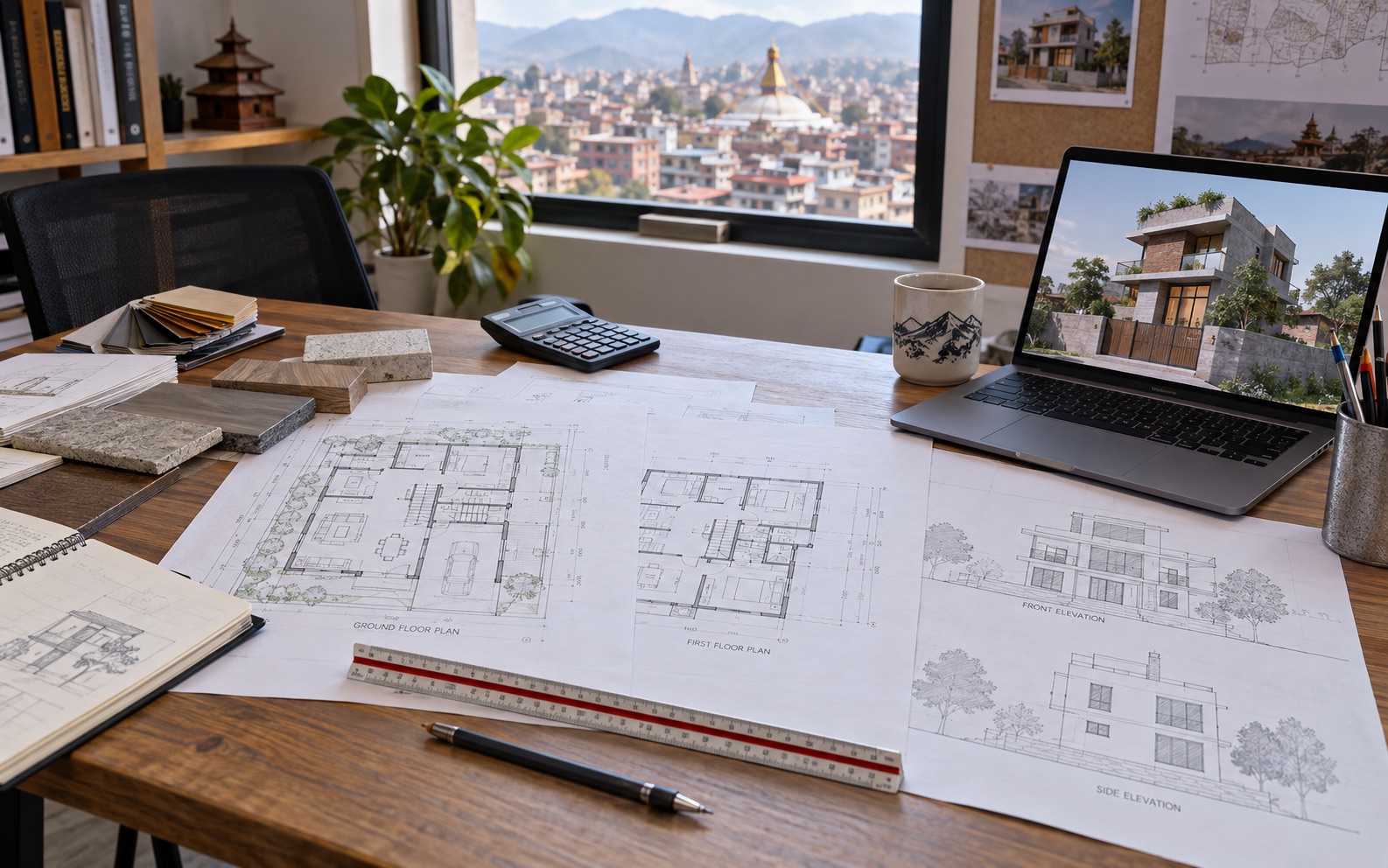
Building permission in the Kathmandu Valley, step by step
The drawings you need, the offices you visit, the fees you pay, and the three mistakes that add months to an approval.
Read article
What it actually costs to build a house in Kathmandu in 2026
A realistic breakdown of per square foot rates, where the money goes, and the five costs that are usually left out of the first quotation you receive.
Read article
Questions
Asked by nearly every client
For a standard residential build in the Kathmandu Valley, expect between NPR 2,400 and NPR 3,400 per square foot of built area in 2026, depending on finish level, plot access and structural complexity. That figure covers the structure, masonry, services and standard finishes. Furniture, appliances, boundary walls and landscaping are priced separately, and we always list them separately rather than hiding them inside a rate.
Yes. Once the drawings and the bill of quantities are agreed, the contract sum is fixed. It changes only when you request a change, and any change is priced in writing and signed before it is built. If we made an estimating error, we carry it.
A three storey residential build usually runs nine to twelve months from mobilisation to handover, assuming municipal approval is already in place and payments are released on schedule. Renovations are shorter but less predictable, because the condition behind old finishes is not fully known until work starts.
Yes. We prepare the drawing set required by the municipality, assist with the application, and follow it through the office. Government fees are paid by the owner and are shown separately, not marked up.
Payments follow inspected milestones, typically six for a residential build: mobilisation, foundation, structure, masonry and roofing, finishing, and handover. Each one is released after the work is measured and checked, so payment always follows completed work rather than preceding it.